
· Ball valves
· Gate valves
· Butterfly valves
· Pinch valves
· Knife gate valves
· Diaphragm valves-Straight through type
· Penstocks valves


· Check valves
· Strainers
· Safety relief valves
· Bursting discs
· Expansion joints
· Pressure regulators
· Steam traps

· Level gauges
· Sight flow indicators
· Pneumatic actuators
· Electric actuators
· Hydraulic actuators

29 bis, rue Paul Bert
44600 Saint-Nazaire - France
Tél. +33 (0)2 51 10 18 18
Fax +33 (0)2 51 10 18 19
Contact us
Legal
Secure Area
User:
Password:
 |
 |
 |
 |
 |
 |
 |
Strainers
The purpose of an industrial filter is to trap any solid particles found in fluids, whether gas or liquid. The filter also contributes to the safety of the installation by trapping particles that are too big and would damage the installation downstream. pumps, valves, safety valves, etc.
Y Strainers

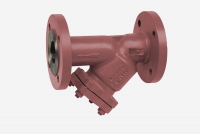 Matières des Corps de Filtres : Acier, Inox, Laiton, Bronze, Fonte, Alliages spéciaux...
Série : PN16, PN20, PN25, PN40, PN50, PN100
Diamètres : DN8 à DN600
Raccordements : Taraudé : BSP, NPT
A souder : SW, BW
A brides : PN16, PN20, PN25, PN40, PN50, PN100
Nos filtres peuvent être réalisés :
- En construction moulée
- En construction mécano-soudée
- Tamis spéciaux pour filtration particulière
Filtre plat
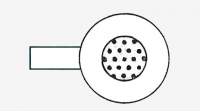 Construction : Plat
Matières : Inox 304, 316
Série : PN10, PN16
Diamètres : DN40 à DN600
Raccordements : Entre brides PN10, PN16, PN25
Nos filtres plats peuvent être réalisés en tôle perforée et maille selon le niveau de filtration souhaitée , selon la spécification.
Cone and Basket Temporary Strainers
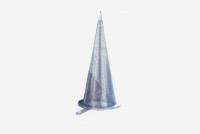 Construction : Conique ou tronconique
Matières : Inox, Alliages spéciaux...
Série : PN16, PN20, PN25,PN40, PN50, PN100
Diamètres : DN25 à DN1000
Raccordements : Entre brides : PN16, PN20, PN25, PN40, PN50, PN100
Nos filtres provisoires, coniques ou tronconiques peuvent être réalisés en tôle perforée et maille selon le niveau de filtration souhaité. Selon la spécification, le filtre peut être uni-directionnel ou bi-directionnel.
T Strainers
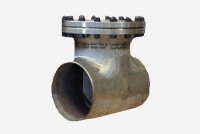 Construction : Mécano-soudé, Tamis traineau
Matières des Corps de Filtres : Acier, Inox, Alliages spéciaux...
Série : PN16, PN20, PN25, PN40, PN50, PN100
Diamètres : DN25 à DN1000
Raccordements : A souder : BW
A brides : PN16, PN20, PN25, PN40, PN50, PN100
Tamis spéciaux pour filtration particulière sur demande
Angled Basket Strainers
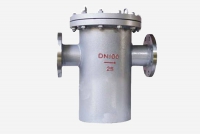 Construction : Mécano-soudé / Tamis panier
Matières des corps de filtres : cier, Inox, Alliages spéciaux...
Série : PN16, PN20, PN25, PN40, PN50, PN100
Diamètres : DN25 à DN1000
Raccordements : A souder : BW
A brides : PN16, PN20, PN25, PN40, PN50, PN100
Tamis spéciaux pour filtration particulière sur demande
Simplex and Duplex basket strainers
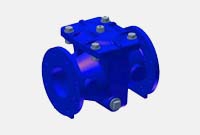 Construction : Simple ou double panier
Matières du corps du filtre : Fonte
Série : PN10, PN16, PN25, PN40
Diamètres : DN40 à DN600
Raccordements : A brides : PN10, PN16, PN25, PN40
Fabricated strainers